2025: Staying present and relevant – united for the right to health
In 2025, large parts of the world faced worsening turmoil, with unmet medical and humanitarian needs becoming ever more pressing. Conflicts intensified while new ones erupted, and humanitarian needs reached unprecedented levels. From Gaza to Ukraine, from the Democratic Republic of the Congo to Yemen and beyond, crises deepened while respect for interna-tional humanitarian law continued to erode, constrai-ning access to care and putting patients and health workers at risk.
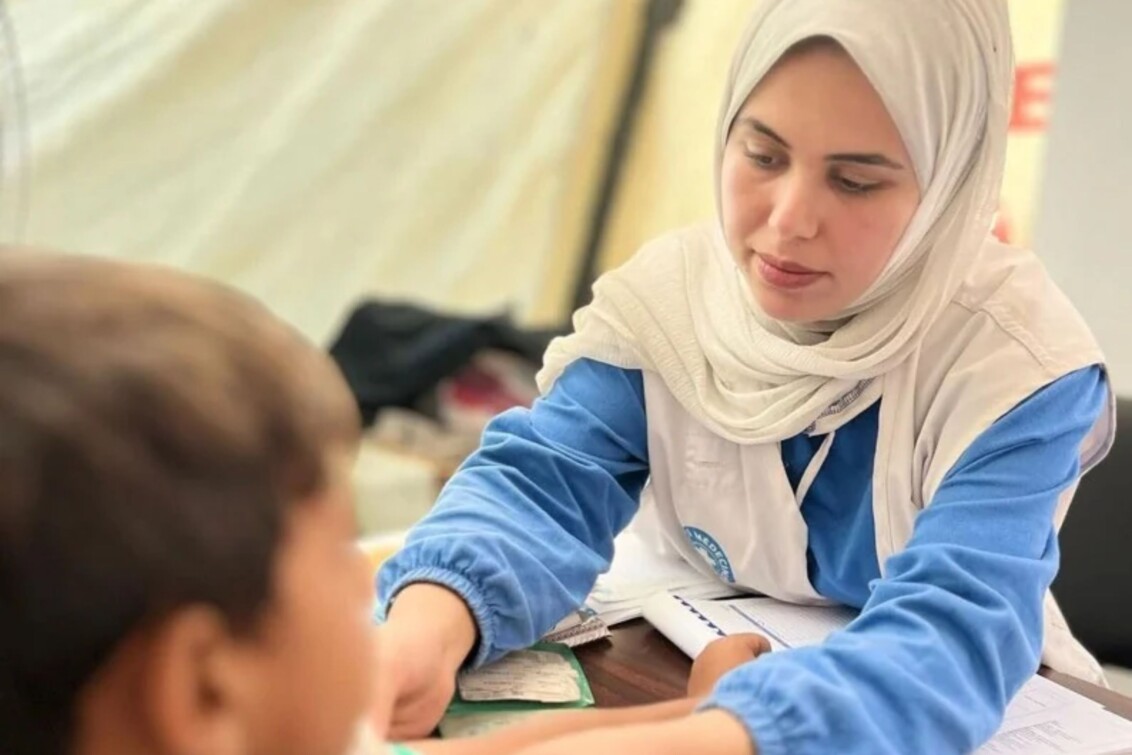
And yet, the Médecins du Monde International Network did not walk by on the other side of the road. In Gaza, our teams supported overwhelmed health services and continued to deliver care under extreme constraints. In the Democratic Republic of the Congo, we responded to repeated outbreaks and chronic instability, ensuring access to essential healthcare for vulnerable commu-nities. In Colombia, we worked alongside populations affected by violence and displacement, strengthening access to care and mental health support. Beyond crisis settings, our programmes also continued to provide care for people excluded from health systems; migrants, people experiencing homelessness and those left behind by widening inequalities.
In 2025, we continued not only to provide care, but also to bear witness and to speak out. We defended the right to access safe abortion in increasingly restrictive environments. We spoke out against violations of inter-national humanitarian law, calling for the protection of civilians and medical facilities and for humanitarian access. We challenged policies that exclude people from healthcare. Across the International Network, we worked to ensure that the voices and rights of affected populations remained at the centre of public debate.
Meanwhile, major shifts in the funding landscape
- including the dismantlement of USAID and the broader decline in Official Development Assistance
- have confirmed that the environment in which we operate is changing not just politically but also structurally. The foundations of humanitarian action were increasingly challenged. Multilateralism was
questioned, anti-rights movements gained ground, and the space for principled, independent humanitarian work continued to shrink.
Faced with this reality, we have made a collective and determined choice: not only to adapt, but to strengthen our International Network for the future. The “humanitarian reset” has prompted changes to reinforce proximity to affected populations. Within our International Network, we work to strengthen coherence and coordination across our actions, while diversifying our funding base and investing in shared capacities to position ourselves as a unified internatio-nal Network with a more sustainable economic model.
Above all, we recognise that our greatest strength lies in our people — in our teams and our chapters, and in our collective commitment. It is through their exper-tise, dedication and ability to work together across contexts that we can remain relevant and effective. This report is more than a reflection of our activities. It is a reaffirmation that access to healthcare is not a privilege but a right that we will continue to defend together.
Hendrik Verschuur & Steven Lloyd
Co-coordinators of the Network Presidents Council